
vol.1
Texts in KONTEKST:
Entanglements
Introduction:
What does it Mean to Entangle?
by Emelie Victoria, Beatriz Urze, Sam McNeil,
Gabrielė Žukauskaitė, Elena Botts
by Rosa Prosser
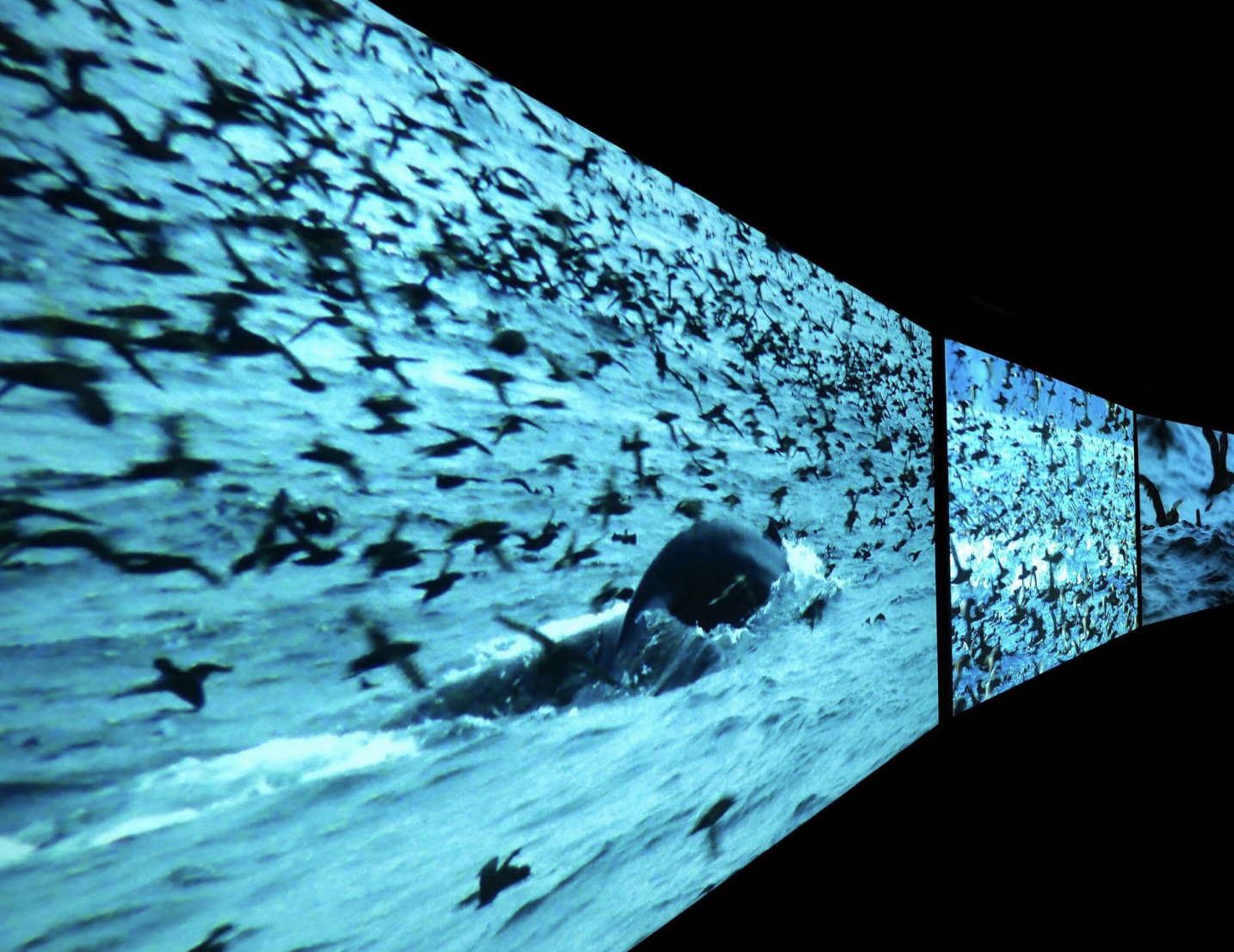
“The Sea is History” emerged out of two lingering questions: (1) how do we do history in this moment; (2) is it possible to “think-with” the sea? September-December 2025, immersed with-in a class titled “Proseminar in Film and Visual Studies,” we gathered to respond to the first, using visual arts and film as a loose guide. Overlapping this time, the work of British artist John Akomfrah was showing in the MFA Boston, part of an exhibition titled “Deep Waters: Four Artists and the Sea”. Akomfrah’s body of work became a landing place for our group – his use of archive and montage; (semi)science-fiction and sound – we watched Handsworth Songs, Seven Songs for Malcolm X, The Last Angel of History… all the while asking our question: how do we (can we?) do history now?
by Anna Japaridze
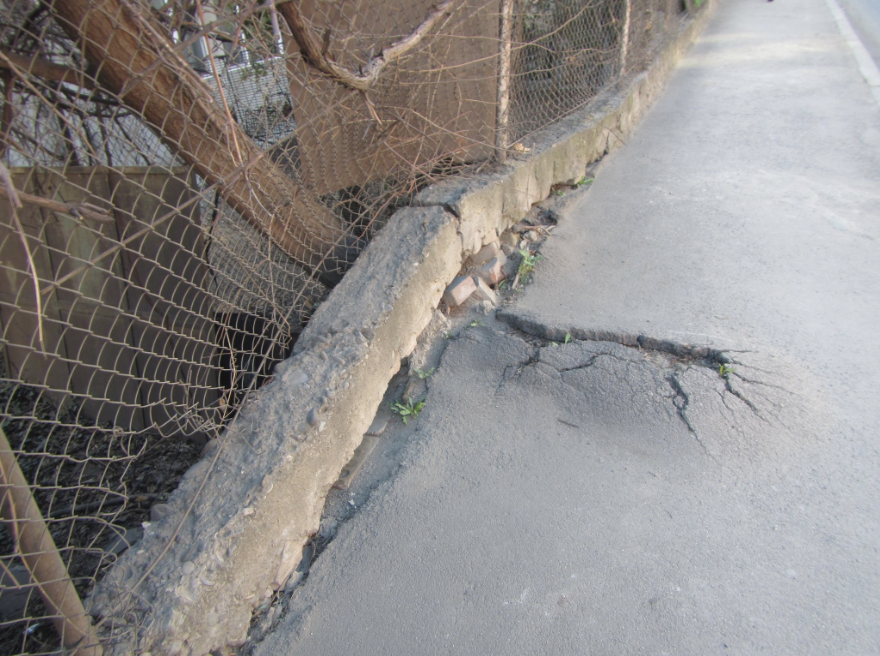
As public access to land in Tbilisi, Georgia becomes increasingly restricted, undefined urban spaces become vital for sustaining sensory engagement, autonomy, and alternative ways of imagining and inhabiting the city. Drawing on personal observations as a long-term resident of the neighbourhood of Saburtalo, the author traces points of contention behind the city's construction boom, questioning the proposed nature of these transformations in a social context that includes increasing inequality, high rates of addiction, and a sharp rise in state authoritarianism.
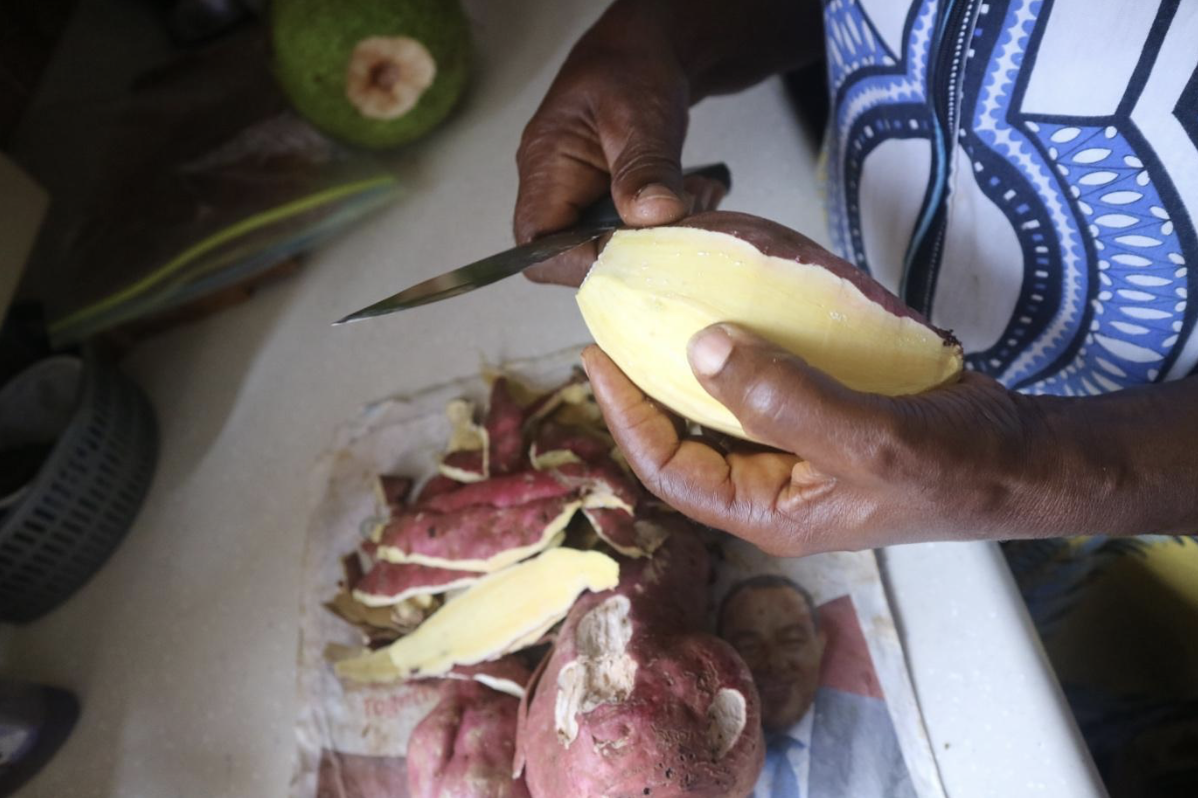
Based on experiences during research conducted in Jamaica and the Uk, this text explores the links between food, land and knowledge across different generations. Through a multimodal approach, it uncovers the ways in which Caribbean culture can be preserved in a care-full way. One that nourishes everyone involved in the process.
by Lauren Facey
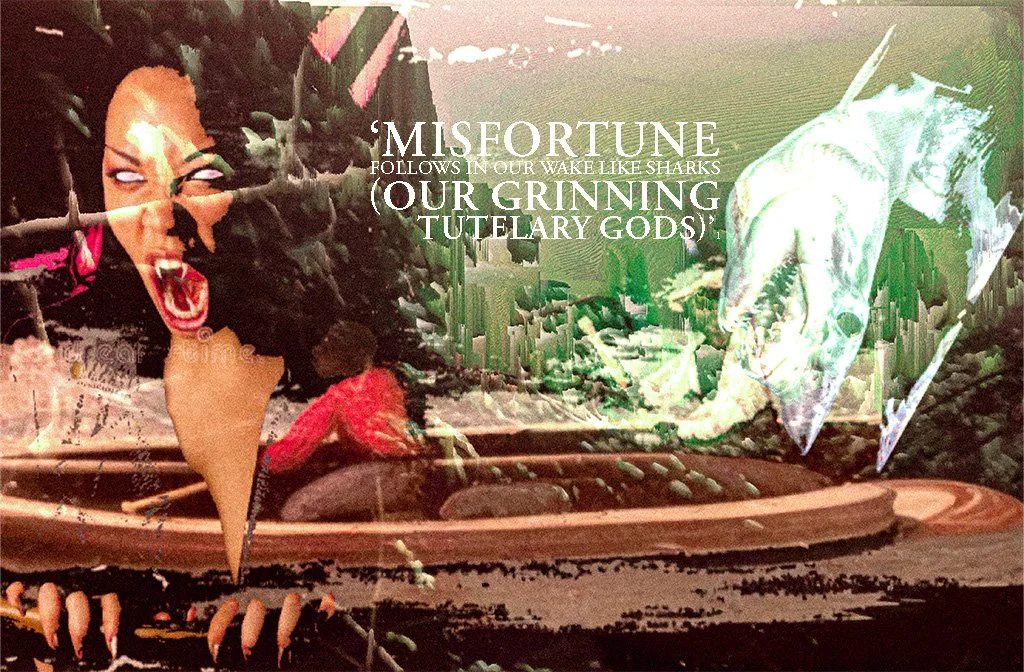
by Ella Justine Frost
SHIVERS is a poetic, coarse, and careful exploration of the entangled symbolism of sharks, Black vampires, and the transatlantic slave trade as sites of fear, extraction, and monstrosity. Drawing on personal and historical narratives, the text examines how these figures challenge anthropocentric hierarchies. The text interrogates the moral coding of the "monstrous" and reveals how fear and rage are weaponised to justify oppression. By weaving together speculative horror, ecological grief, and historical trauma, Ella seeks to reconcile these entities not as equivalents, but as relational forces that expose the enduring violence of colonialism and capitalism.
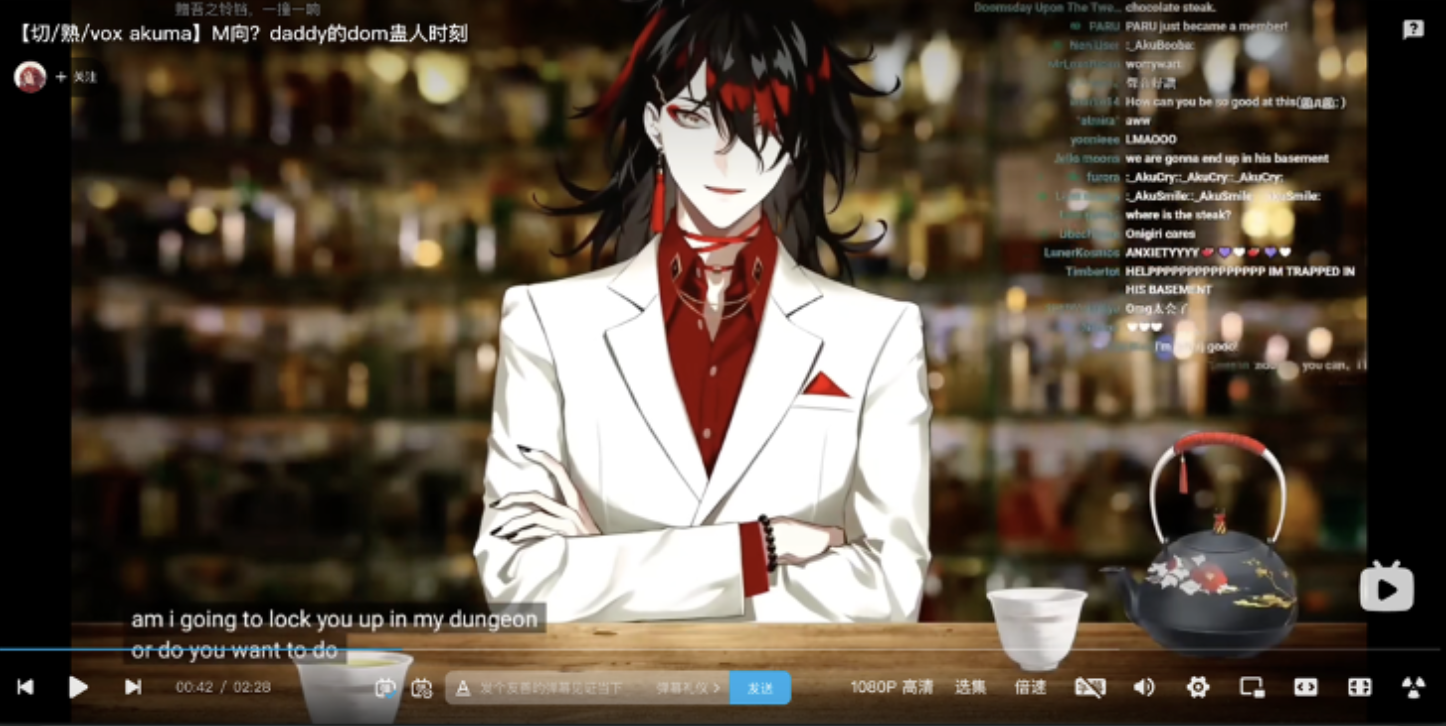
This research examines how VTubers negotiate authenticity, identity and performance through the relationship between the avatar and the nakanohito. Grounded in six months of digital ethnographic fieldwork conducted between 2023 and 2024 on the Chinese video-sharing platform Bilibili, it investigates how the creative and reflexive subjectivity of the nakanohito is mediated through VTubing. The essay explores the emic concept of “2.5-dimensionality” as a state of being that embodies a complex negotiation between virtuality and reality, and between authenticity and representation. While VTubing is often understood as roleplay, many practitioners reject such expectation and instead identify as pitao-ren: people who act as themselves while wearing a virtual “skin.” This practice, known as taopi, functions as a technology of the self through which performers understand and craft their identities.
by Bichen Xu
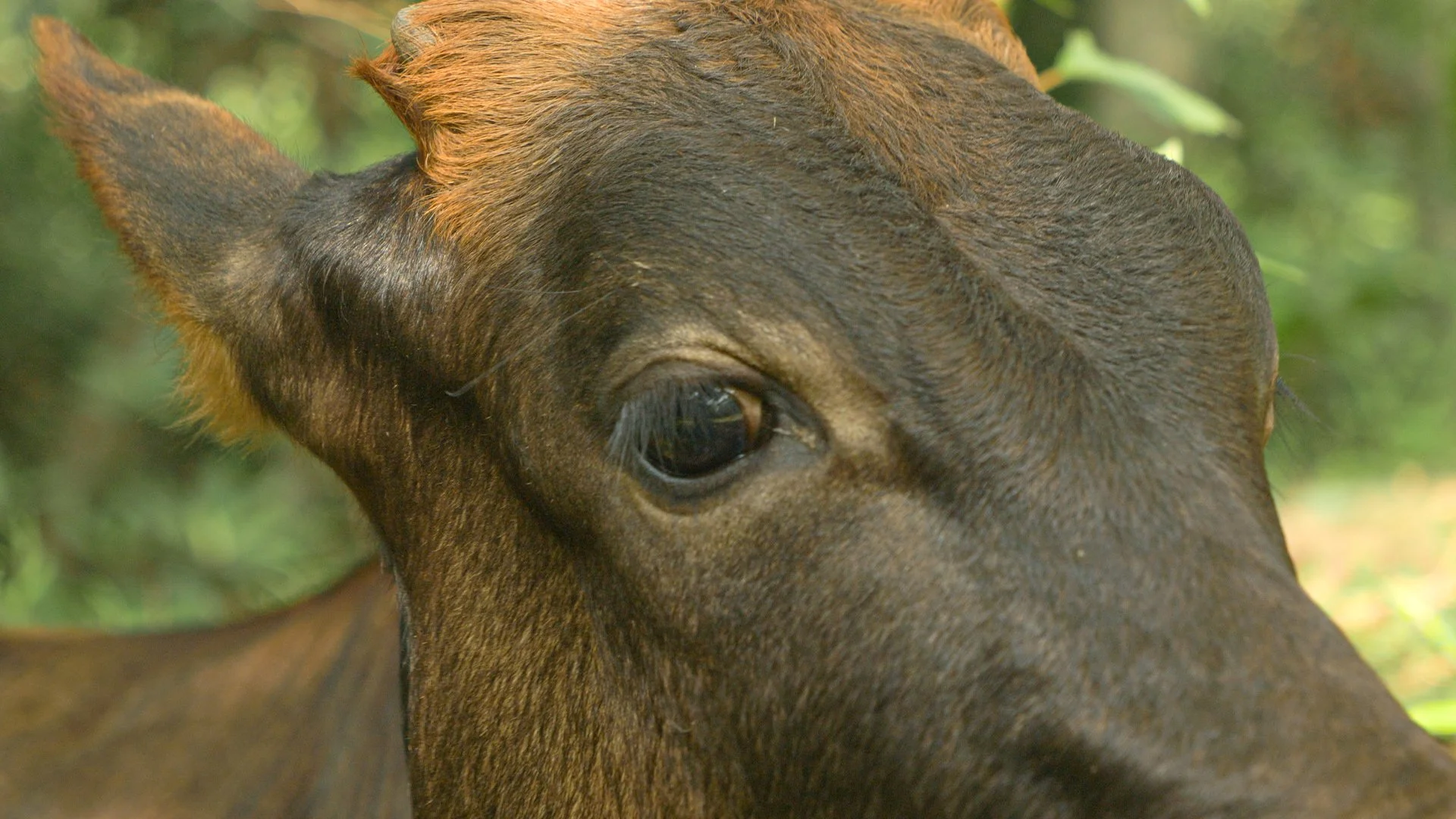
A photo essay about a one month fieldwork trip following free-roaming cattle through the streets of Nepal, Kathmandu. It focuses on the Pashupatinath temple precinct as the area with the highest concentration of cattle. The article combines reflexivity with anacdote and literature to meander through encounters in the streets. It reflects on methodological challenges specific to fieldwork with non-humans; such as translation, proximity and anthropomorphism, making a case for the benefits of observational filmmaking all the while staying with the messiness of encounters across difference.
by Xena Louise Stockley White
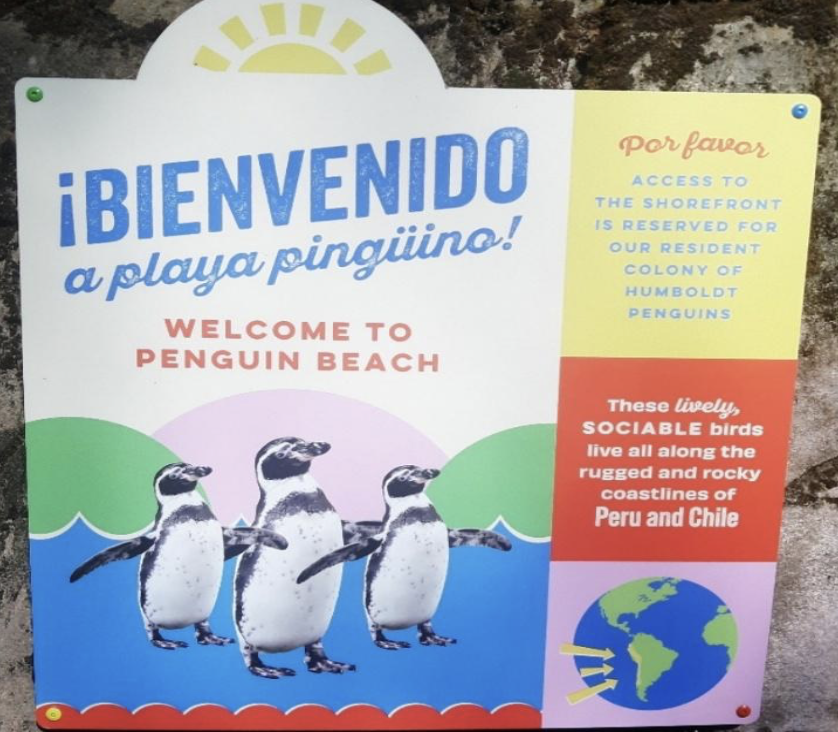
by Rossella Sette
Nonhuman animals are increasingly erased from human lives, viewed mainly as food, commodities, or objects of display. Using an ecolinguistic framework, this text - adapted from my more in-depth research, provides an account of the linguistic and visual representation of Humboldt penguins in London Zoo signage. Through a multimodal analysis, I identified stories of salience, erasure, evaluation, conviction, framing, and ideology. While salience portrayed Humboldt penguins as sentient beings deserving respect, other stories reinforced anthropocentric ideologies that legitimise human control under the guise of conservation. The text advocates for more ecocentric representations that foreground nonhuman animal agency and promote ethical human–animal co-existence.
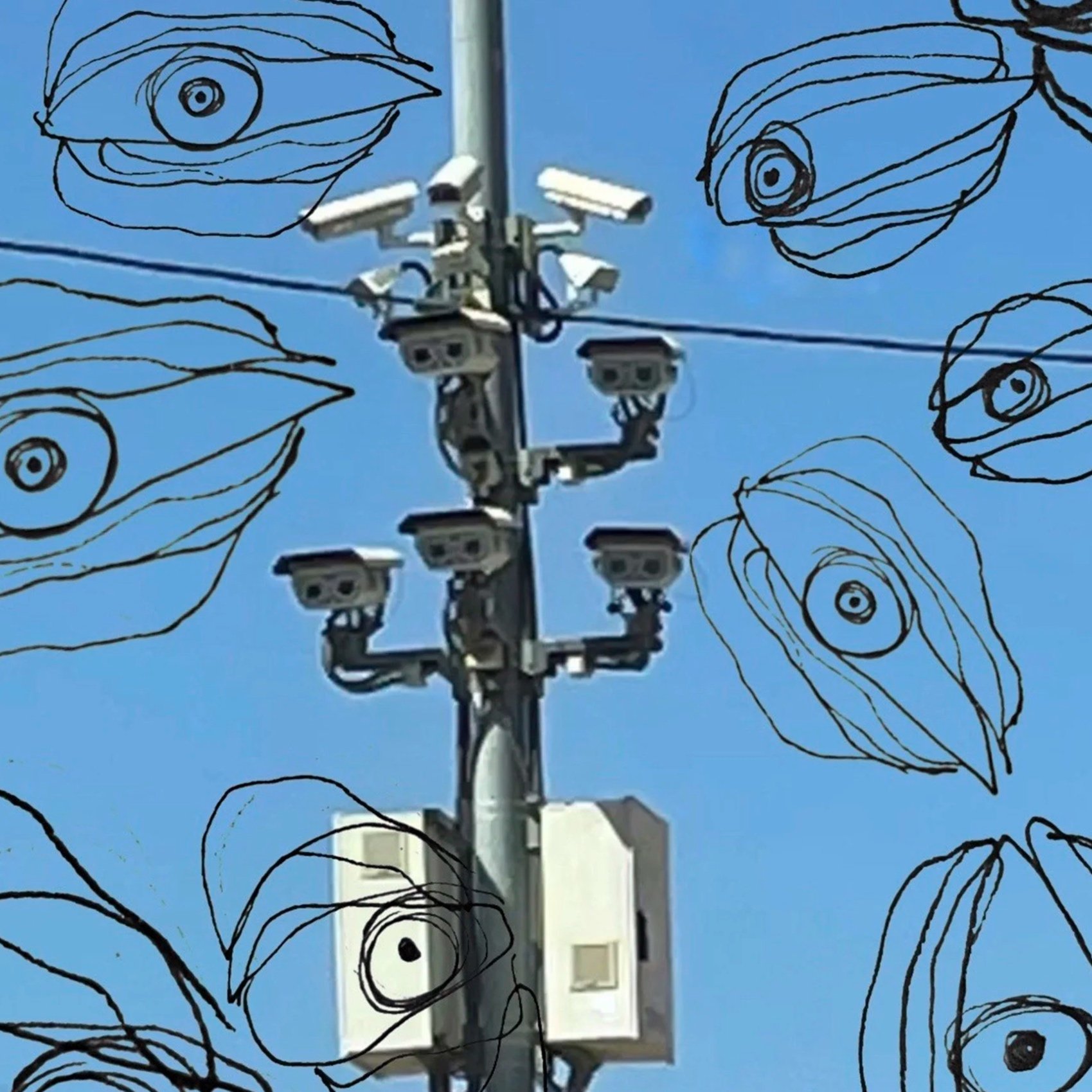
This work examines the relationship between Israeli settler colonialism and ecological degradation in Palestine. By focusing on ecocidal manifestations within the West Bank, Gaza Strip, and the territories occupied in 1948, it refuses to recognise colonial borders. This article illustrates how settler colonialism operates through ecocidal practices that reconfigure the landscape while dispossessing Palestinians of land, livelihood, and ecological identity. Weaved together with the author's own auto-ethnographic accounts/memories/reflections as a Palestinian growing up in Ramallah, this work explores ecocide, colonial violence, and the politics of environmental justice in Palestine.
by Rand Abdalqader
About the editors:
Emelie Victoria (she/they) is a Swedish/Norwegian multimedia researcher and artist working mainly through photography, film and ethnographic storytelling. They have a BA in Peace and Development Studies from Uppsala University (2020) and have experience working in the international development and human rights space in Sweden and Zimbabwe. They then went on to do a MA in Visual Anthropology at Goldsmiths University (2024).
Emelie’s work is inherently interdisciplinary — a focus on relationships and collage remains at core of their work, which often explores what happens when we remix, juxtapose and activate. They are working on an upcoming PhD project on sensorial relationships in forested landscapes of central Sweden. She has published a peer-reviewed methods article on Correspondence as Care with Anthways Journal.
Beatriz Urze (they/them) is an artist and researcher from Porto, Portugal. They studied Film and TV at the University of the Arts London (2021), and later went on to get a MSc in Visual, Material and Museum Anthropology at Oxford University (2023).
Beatriz is currently thinking about how we can use art and creative processes to (re)connect with the environment and encourage systems of degrowth while bringing value to local communities. With this in mind, they founded Farpa: an arts centre in the periphery of Porto. In 2025 they published an article with the peer-reviewed, online journal TRAJECTORIA. A Complicated Portrait of the Portuguese River Paiva is a photo-essay that focuses on underwater analogue photography to explore the material traces a river’s water can leave behind on a roll of film, therefore co-creating its own portrait and challenging notions of agency in image-making.
Elena Botts (any) is an interdisciplinary artist and researcher at the University of Essex. Elena’s work explores experimental sound, multimedia art, and the interrelation between artistic practice, perception, and social transformation through collaborative installations, residencies, and projects/releases in digital and physical media. Elena organizes the unknown sound collective and an associated radio archive and associated publications centring on experimental artists and their inner worlds.
Elena has a (BA) in Global & International Studies and Mind, Brain, & Behaviour from Bard College (2018), a MFA in Interdisciplinary Arts: Performance and Decolonial Praxis from Goddard College (2025) and is currently a PhD Candidate in Film and Literature — University of Essex (2026).
Gabrielė Žukauskaitė (she/her) is a Lithuanian anthropologist and photographer from Vilnius, Lithuania, where she’s currently based after 11 years of living and working across Europe. She holds a BA in Social Anthropology from the University of Kent (2018), including a year at Vrije Universiteit Amsterdam, and an MSc in Medical Anthropology from the University of Edinburgh (2022).
Her work brings together ethnographic inquiry and analogue photography, exploring how we sense and move through environments. Her master's research, Nocturnal Landscapes of Lebanon, examined experiences of insomnia and sleeplessness in Beirut after the 2020 port explosion, exploring how political violence inscribes itself in collective bodily rhythms and urban nighttime experience. She has lived and worked in Sarajevo, Beirut, Berlin, and Bristol, where she spent recent years working in addiction recovery, helping people reconnect with local communities through nature-based sessions in foraging, woodworking, and herbal medicine making.
Sam McNeil (he/him) is a filmmaker and researcher. Drawing from a background in natural sciences, in particular ecology, genetics and entomology, as well as his love for science-fiction, Sam plays with fantasy as a multimodal space for expansive, unpredictable and interdisciplinary filmic/ethnographic/sensory inquiry.
He is interested in the role that fantasy can be used as a bridge between modes of thought, in order to build the holistic approaches to knowledge generation that are needed to address the threats of climate change, biodiversity loss, habitat destruction and pollution, as well as counter the often hegemonic, inaccessible and Eurocentric nature of the sciences. Through filmmaking, Sam explores sensory approaches that foster polyvocality and non-textual communication.


About the authors:
Xena Louise Stockley White (she/her) is a visual anthropologist from the Forest of Dean (UK), whose practice is rooted in long-term engagement with landscapes and communities. She has documented multi-species relationships and is currently working on an audio documentary and illustrated book 'The Forest of Dean: Lore of Water and Stone.' Her vision lies in the radical potential for ethnographic media to capture the emotional and sensory dimensions of multispecies connections, revealing their significance in the mundane and everyday. Her approach underscores the urgent need to share alternative narratives of coexistence, challenging the anthropocentric tales that generate the intersecting crises of our times.
Rosa Prosser (she/her) is a Cumbrian filmmaker and researcher, pursuing a PhD in Film and Visual Studies at Harvard University. Her creative and research practices explore the entanglements of place, weather, history, and fiction through an elemental lens – in particular, that of the wind. Rosa holds a BA in the History and Philosophy of Science from the University of Cambridge, and an MFA in Creative Documentary by Practice from University College London (UCL)’s Public Anthropology department. She is currently Visual Arts and Multimedia Editor for The Goose: Journal of Arts, Environment, and Culture in Canada.
Rossella Sette (she/her) is an emerging researcher in Linguistics. She holds a BA in Linguistics and Spanish and an MA in Applied Linguistics and Communication from Birkbeck, University of London. Believing that the health of the planet lies in our acknowledgment of the interdependence of all beings, her research explores the intersection of language and ecology, particularly through the lens of ecolinguistics. She is committed to investigating how language and other modes of communication perpetuate or challenge anthropocentric worldviews. In her master’s dissertation she employed a multimodal approach to analyse the London zoo signage of Humboldt penguins, Asiatic lions and Sumatran tigers both linguistically and visually, examining what these representations reveal about how we humans think about and treat other species and the planet. Through her research, she hopes to contribute to more ethical and ecocentric forms of communication that promote a more balanced and respectful relationship between humans, nonhuman animals, and the wider living world.
Rand Abdalqader (she/her) is a London-based Palestinian writer whose work intersects environmentalism, indigenous ways of living, and anticoloniality. She is interested in storytelling, critical inquiry, and advocacy, and aims to explore how power, land, and culture shape communities and their struggles for justice. She graduated from Birzeit University in 2020 with a Bachelor's degree in Journalism, Media, and Sociology. Following her undergraduate studies, she completed her MSc in Human Rights at the London School of Economics and Political Science (LSE) in 2025. Her studies allowed her to engage with anticolonial thought and frameworks, particularly related to Palestine.
Anna R. Japaridze (she/her) is a British-Georgian filmmaker and writer based in Tbilisi, Georgia. She holds a BA in Fine Art from Goldsmiths, University of London, and an MFA in Documentary Film from Stanford University. Her interests include soil, socialism and infrastructure, sensory perception, and food that can survive without refrigerators. Over the last decade, Anna has made around ten short films, and her work has been supported by a BAFTA LA scholarship (2019) and Sundance Ignite fellowship (2022). She is in the process of co-directing a feature documentary in the highland region of Tusheti, Georgia.
Lauren Facey (she/her) is a British-Jamaican researcher whose work explores the relationship between food, land, memory and diasporic belonging. Drawing from ethnographic research in rural Jamaica, she is interested in cooking and communal eating as practices of care, cultural transmission, and collective survival. Moving between the kitchen and research field, her work focuses on embodied knowledge, intergenerational memory, and the social life of food.
Bichen Xu (she/her) is a writer, artist and researcher specialising in material and visual anthropology, with a focus on technology, infrastructure, digital space, popular culture, narrative and governance. Born in Shanghai, China, she went on to get a BSc in Anthropology from UCL and a MPhil in Visual, Material and Museum Anthropology from the University of Oxford.
Her work explores the politics, materialities and aesthetics of human-nonhuman relationship. During the pandemic, she carried out ethnographic work on China's digital public health service and infrastructure of risk management. For her MPhil dissertation, she completed six months of ethnography exploring the landscape of the VTuber (Virtual YouTuber) industry in China. This research is one of the first ethnographic studies of the VTuber industry, contributing to emerging scholarship on digital live performance and digital mediation across media anthropology and media studies.
Ella Justine Frost (they/them) is a multidisciplinary artist and researcher based in the UK, working across photography and artistic moving image and using auto ethnographic techniques to distort dominate narratives. Through their practice they explore analogue technologies, home videos, water and grief, horror, community, queer nightlife, and diasporic experience; with a particular interest in the political possibilities of the monstrous. They embrace a sensorial approach, blending poor images, intimacy, and play. Ella co-founded Black Fly in 2016 and has facilitated sexual health workshops for many years. They hold an MA in Visual Anthropology from Goldsmiths, University of London (2025).