
Emelie Victoria, Beatriz Urze, Sam McNeil, Gabrielė Žukauskaitė, Elena Botts
DOI: https://doi.org/0.5281/zenodo.21402983
Published July 19, 2026.
What does it Mean to Entangle?
Emelie:
There are moments when things connect, entangle and fall into place. You read an edited volume (that edited volume is Strangers Within: Documentary as Encounter) and it slightly changes how you look at both edited volumes, writing, and documentary. And a part of you also thinks “what if I could put together the writing of people around me to create something similar”? Around here, you realise you’re part of a collective of people who’ve said that they also want to platform text-based work on critically engaged artistic research and anthropology – so you ask them, and they say yes. You all get together to reach out to emerging authors, researchers, and artists to ask if they want to write something – and they say yes. Suddenly, you’re in the middle of the messy, blissful, difficult-yet-effortless editing of a publication.
Beatriz:
Amongst the already ongoing organising of a film festival about multispecies entanglements, and because all of us editing were also so personally drawn to this same thematic, it felt natural to continue to question it in the written format. As we drew together the outlines and proposals sent to us by our contributors, a sense of the richness of diversity began to creep up on us. Diversity is, after all, what makes communities of any kind thrive. How fitting, then, for an anthology of texts about becoming together to be able to be a living proof of this, both through the knowledge and insight it brings us, but also in its collage-like form. I suppose the central curiosity we must satisfy with this publication is, all in all, a simple one: where will the exploration of the relationships between humans and their environments from different cultural, political, speculative, historical, and sensorial perspectives take us?
You might be wondering – what exactly do we mean when we say multispecies entanglements? If you have never heard the term before, it’s no doubt bound to generate some confusion, or bring about questions. Good! There is no one way to define this concept, but at its core we believe it encompasses the interconnectedness of relationships across species, time and space - even those that might not seem so obvious at first. Our general intention is to point towards that which we find when we look closer into our environments, when we begin to notice what beings make up our spaces, how they shape our lives and disrupt previously strict boundaries between us and them. If by the end of this publication you find yourself thinking of the world in an expanded way, considering encounters of making and undoing that you hadn't before, then it will be a job well done.
Gabrielė:
Ever since we embarked on the quest to engage with this theme, it too had to become an embodied experience - something we had to live alongside as we edited, walked, thought about, corresponded and returned to our respective day-to-day processes. For how else were we going to remain genuinely analytical while crafting our programme, and thus – this publication? We know first hand how embodying the question of multispecies entanglement(s) is nothing short of confusing. There’s no simple explanation (correct me if I’m wrong!), only more and more reasons to wonder about the complexities engaging with the world in this way might reveal, raising questions about the unfolding of interactions amongst living (and decaying) entities.
Perhaps, that’s the whole point - rather than resolving the confusion, we learn to sway with it. Engaging with multispecies entanglement(s), in other words, becomes a continuous act of noticing. And by noticing, I mean feeling the weight of maintaining a conscious presence in the living world. It is experiencing the realms of wonder at the same time as the resistance to commit to care - witnessing not only the joys of interconnectedness, but the actual burden to respond, engage, be present, aware, and able to sustain such an awfully generous relation. To participate in multispecies entanglement(s) as an active, conscious agent, is hard work. It requires time, capacity, and a whole lot of commitment.
Elena:
It goes unsaid that this discussion has deep roots. The concept of entanglement itself has been theorised across disciplines, from Karen Barad's framing of matter and meaning as co-constitutive¹, to Anna Tsing's colossal Arts of Living on a Damaged Planet (2017). We invited our contributors to think with it, to let the concept be transformed by the particularities of their engagements, whether those engagements are with cooking practices, decolonial foraging, urban bovine ecologies, or the speculative possibilities of mythology. All touching on landscape, history and ways of being-in-this-world, to work with concepts that are both known and in need of rephrasing. As Kathryn Yusoff writes:
‘Geography involves working across human and physical worlds, and so is about as close as it gets to a truly interdisciplinary subject, but it has colonial origins which it has not entirely reckoned with. We need broader transdisciplinary work, connecting social sciences, arts, sciences and other fields, to challenge dominant worldviews in the context of policy and publics… planetary relation … connects distant geographies in transformative relations. We study colonial legacies, environmental damage, and what we call “epistemic harm.”’ ²
Beatriz:
Our goal with this publication is, then, to contribute to a collective moving beyond binary divides, to de-centre the human and to question hierarchies, violence, responsibilities and care underpinning the categories we understand the world through. Though contemporary conversations have evolved to enable publications such as these, we owe it back to acknowledge how this is underscored by the nature and culture divide dialogues initiated in the discipline by scholars such as Bruno Latour and Philippe Descola.
Sam:
As editors, we have been blessed with the opportunity to collaborate with authors who encounter the topic of multispecies entanglements in ways that are surprising, invigorating and diverse. The varied texts herein, when viewed alongside one another, bring out new perspectives and ideas within each other. We approached this topic with key questions in mind; How can ‘entanglements’ be made more tangible through text?What methods of research are there that can foster agentive multispecies relationships? How to approach the written word as a form of translation across more-than-human perspectives, and between non-verbal sensory experiences?
Our contributors have taken these questions to places we would never have predicted. Each text highlights the individual and collective significance of more-than-human kinship, and the violence of that kinship being suppressed, proving time and time again how the relationships between individuals, communities and environments are never neutral.
We open with Rosa Prosser’s meditation on time, history, and fluidity: The Sea is History. With a tight grip on rhythm (thematically as well as aesthetically) and a poetic sensibility, Rosa departs from John Akomfrah’s installation Vertigo Sea to invite us boldly to linger on how the fluidity of the sea interlinks with the history of humans and the world. In true entangling fashion, she reveals the cyclical and tidal qualities of temporality, urging us not to “fix, frame, contain”³ – and therefore brilliantly setting the tone for what’s to come.
Anna Japaridze’s Sensing Saburtalo follows, placing us in the streets of a small neighbourhood in Tbilisi, Georgia. We walk alongside the author and their friend, Giorgi, to an unmarked hill. It’s from this vantage point that Anna expertly highlights the slow disappearance of undefined spaces in urban environments, weaving together political influence, architecture, and attention towards local ecology to reveal the way coercive forces of the state inform the relationship a population can have with its city’s public space. Throughout her essay, we become part of this process, witnesses to the push and pull of erasure and resistance.
“Dear reader,”⁴ begins Lauren Facey, addressing you directly to tell you precisely what entanglements and this publication is all about: “I do not want this to be an easy, simple, digestible read. It is meant to be messy”.⁵ In What is Carried Through Elder’s Hands, the author introduces cooking practices as a site of entanglement across species, generations, and geographies, speaking in particular about experiences within the Caribbean diaspora. Through language that transports us viscerally into the richness of these textured encounters with sun, pears, porridge, and Red Stripe beer, Lauren brings into focus how important relationships with the land are to identity and belonging - a thread that continues in the works that follow.
Remaining deep within this notion for a moment, we become passengers of Ella Justine Frost’s SHIVERS, where sharks meet vampires to rework the notion of monstrosity and reconcile it with the legacy of the transatlantic slave trade. Maintaining a personal, witty writing style that brings us close to the author, Ella puts their identity, their anger, and their pain into unravelling (or further entangling – does a motion ever come without its mirror response?) cross-temporal and cross-geographical relationships of power and exploitation. It is by giving into the speculative that Ella demonstrates the way it can transform our understanding of the world, driving home the nuanced boundaries between imagination and reality.
We blink, or glitch, and suddenly we have been transported to Bichen Xu’s Beneath the Skin: VTubing and the Performance of Authenticity. Concerned with the limits and dimensions of personhood, Bichen asks how (or what?) do we become when we exist entrenched within the virtual?What affordances does technology allow us that enable identity to be processed and transformed? Through an extensive ethnographic line of enquiry, we get to the bottom of the shapeshifting quality of the “I”, dispersed across layers and layers of screen and skin, reaching towards itself through mediated encounters across the Internet.
Xena Louise Stockley White stays on track, first on the path of cobbled stones in Rishikesh in Northern India, and later (and mostly) in Kathmandu, Nepal. With her Meeting Bovine Bodies we do just that: come in contact with, exchange, touch. Through the author’s ethnography of cattle we arrive at something – a slow drawing together of many threads we’ve been weaving between species and environments. Xena unpacks encounters (within anthropology as a discipline, as well as her own fieldwork), renegotiates boundaries, and asks what it means to live with - or mimic and follow - the movement of species beyond the human. She takes the other seriously, acknowledges difference, and works across it to rejoice in the lessons that can be learnt from co-existence.
It is only natural, then, that we go further into this to trace how present these divisions between the human and the animal are in our language. Rossella Sette’s contribution, Representing Wildlife: London Zoo’s Discursive Construction of Nonhuman Animals from an Ecolinguistic Perspective, comes in to do just that. Armed with a beyond-human toolkit, Rossella exposes the myriad ways non-humans have been commodified, honing in on questions of control enacted by the gaze. Carefully, and with the help of thought out case studies on signage, we deconstruct “how meaning is created and expressed”⁶. The author wants to unsettle, to balance, to “undo … the binaries”⁷ that we so often don't think twice about.
We leave with the work of Rand Abdalqader, About a Land. Ancestral and present, Rand tackles ecocide through the settler colonial project enacted on Palestine. Rooting us in the material ways through which colonialism acts, appropriating land and water as well as restricting plant species and foraging practices, we examine how intrinsically linked it is with ecological violence, how one is not possible without the other. Rand’s work is a final reminder that the harm to our environments is inherited, and that it can be weaponised to claim us, too. It reveals how a relationship to the land comes as resistance to capitalist growth and oppression – how it is only through it that we, as humans, can be truly free.
Throughout these texts, we remain intimate – entangled. We showcase how the personal gives insight into the global how bodies and actions resonate across space. Unknowingly, authors who straddle different disciplines still gravitate towards similar works, providing similar references, inspired by thinkers who, much like them, are attentive to how they move through the world and what moves with them. Central to the questions they raise is always a desire to understand, move or shift perspectives and ways of being in this world.
Gabrielė:
While writing and editing, we, too, have been (un)evenly spatially dispersed. Just like the texts of this publication, each in their own register, engage in the act of translating how elements, bodies, notions and happenings interlace, our communal endeavour lied in matching up our time zones so that we could call and discuss the process, co-write feedback, and send it to and from our shared inbox. In this way, we have also become an artefact of a sort of inter-entanglement – a small collective held together by calls and messages, shared attention (spans) and distant negotiations.
Sam:
We initiated this publication as an extension of the aims of KONTEKST Collective; to be a platform for experimentations in decolonial anthropological practice; for emerging artists to find support and community in an inaccessible and hierarchical creative industry; and for a wider audience to encounter radical theory and practice that often goes unplatformed in our current hegemonic media environment.
Emelie:
This too is reflected in the way we’ve chosen to experiment with citation in this publication. We came across Deborah Kodanovich’s Relational Citation System⁸ – a suggested system of referencing where more than just published sources are recognised in the process of writing. It was a long yet slightly rushed process, and there is much more that can be done with it – but our implementation of the system here feels like a start. Deborah herself was generous in communication and offered guidance where we were uncertain, and the authors received us with patience and feedback when we suggested to go ahead with the RCS. We felt and saw how many of the texts transformed slightly when less recognised sources found their way into the texts, and more direct ways of referencing traditionally academic sources were used. Perhaps this decision was also a nod to authors of auto-theory (Maggie Nelson, Moyra Davey, McKenzie Wark) or works like Liboiron’s Pollution is Colonialism (2021) - where annotations, in-text-explanations and footnotes act as guides that allow us engage with theory and embodied situated experience in more directly entangled ways in an attempt to break down the wall between reader and researcher. The symbols below illustrate what categories of sources that have been acknowledged throughout the texts.
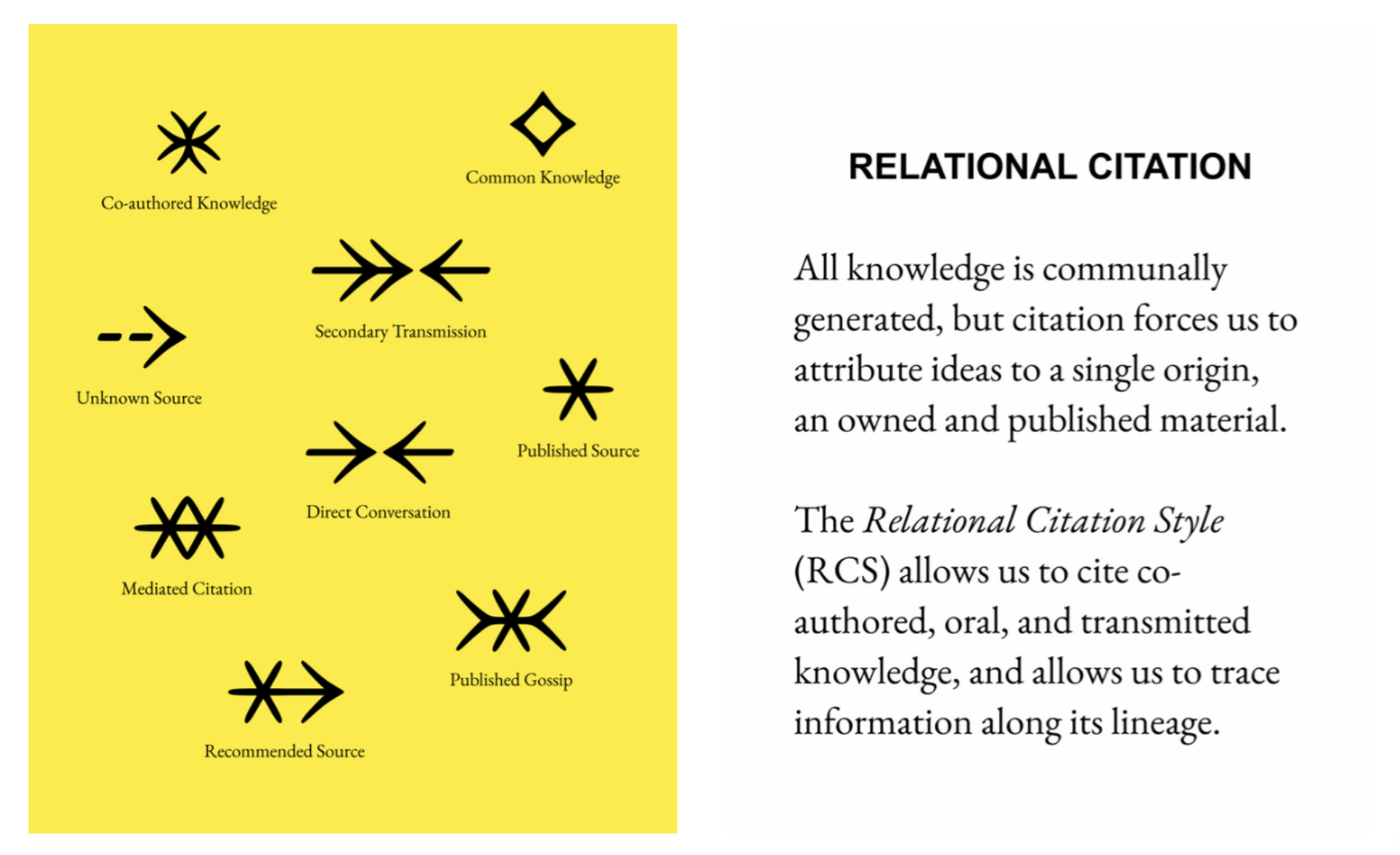
figure 1. screenshot from Deborah Kodanovich’s published explanation of the Relational Citation System.
Elena:
This requires new forms of attention, from the macro to micro, for ‘the world cannot be left out of the garden’ ⁹, as Jamaica Kincaid writes: sometimes, the cultivation of care does not present itself as anthropology at all, and that is precisely how it embodies a transformative new form of anthropological study as practice via gardening as belonging, against coloniality.
So, we want to dream up a way of thinking and writing that is generous, curious, and accountable. This means citing across geopolitical divides, across disciplinary boundaries, across the human-more-than-human. We hope to encourage others to take up the challenges of multispecies entanglement, as a way of being in the world, a way of attending to the relationships that sustain and trouble us through critical inquiry that is never foreclosed - to hold open the questions that bring life meaning in the first place.
Sam:
We’re very excited that through Texts in KONTEKST we are able to bring our approach to a published anthology of work, and hope that this is not the last edition. We’re an open platform, so please do reach out to us if you would like to be involved in any possible future editions of this publication, or any of KONTEKST’s other activities.
¹ Quantum entanglements and hauntological relations of inheritance: Dis/continuities, spacetime enfoldings, and justice-to-come by Karen Barad, 2010.
² A billion black anthropocenes or none by Kathryn Yusoff, (n.d.).
³ Rosa Prosser, in this volume.
⁴ Lauren Facey, in this volume.
⁵ ibid.
⁶ Rosella Sette, in this volume.
⁷ ibid.
⁸ Accessible here: https://dvorit.ca/relational-citation-system.
⁹ My Garden Book by Jamaica Kincaid, 1999.
SOURCES CITED
Published:
Barad, K. (2010). Quantum entanglements and hauntological relations of inheritance: Dis/continuities, spacetime enfoldings, and justice-to-come.
Davey, M. (2020). Index Cards.
Descola, P. (2005). Beyond Nature and Culture.
Henningsen, T., & Joffé, J. (2022). Strangers Within: Documentary as Encounter.
Kincaid, J. (1999). My Garden (Book).
Liboiron, M. (2021). Pollution Is Colonialism.
Latour, B. (1993). We Have Never Been Modern.
Nelson, M. (2015). The Argonauts.
Tsing, A. (2017). Arts of Living on a Damaged Planet.
Wark, M. (2020). Reverse Cowgirl.
Yusoff, K. (2018). A Billion Black Anthropocenes or None.
Citation System
Dvorit. (n.d.). Relational Citation System: Guide and Explanation. Retrieved from https://dvorit.ca/relational-citation-system