
Publication Symposium
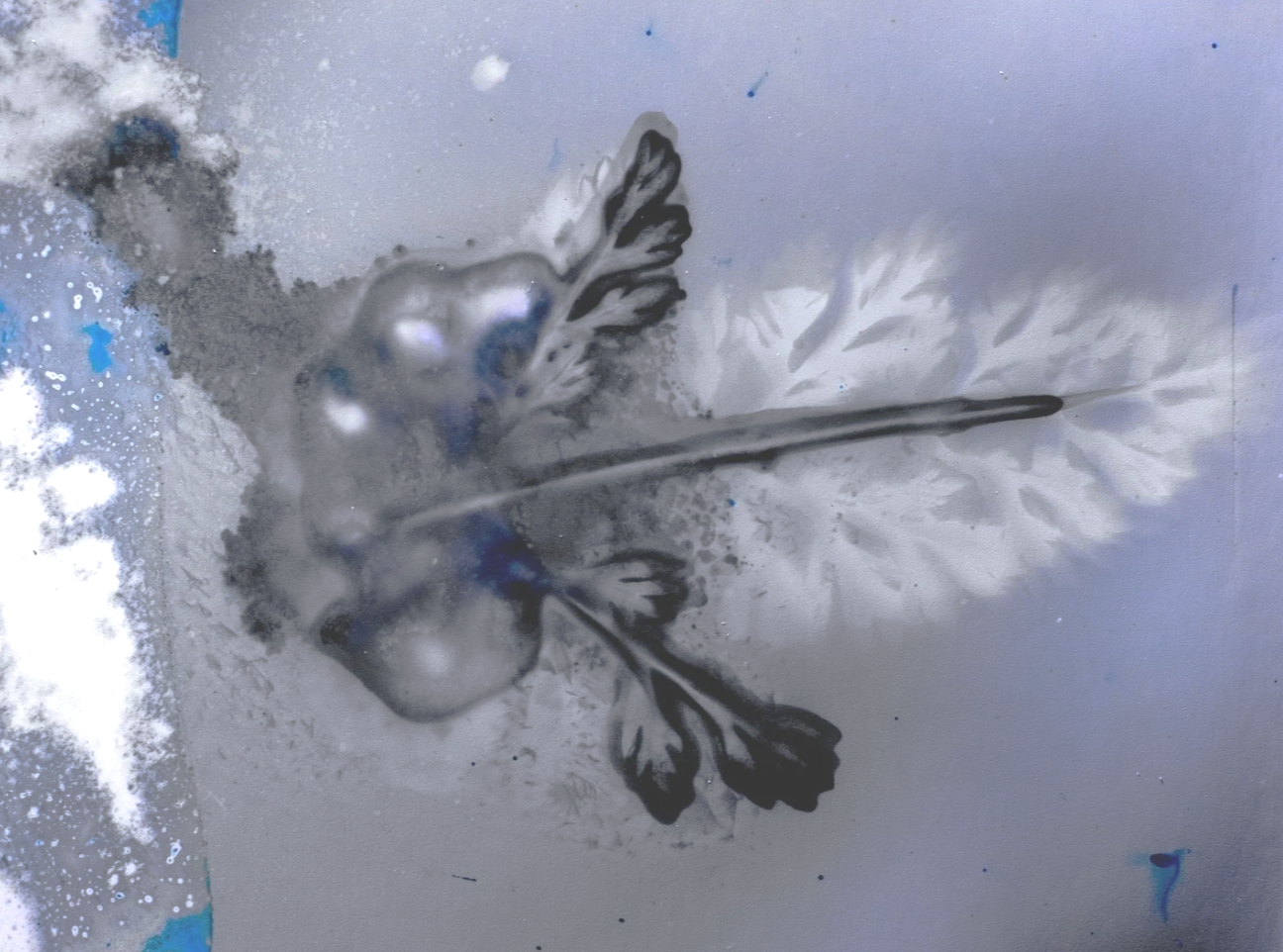
Publication Symposium
by KONTEKST Collective
Publication Symposium
Publication & Talk • Sun 19 July • 15:00 • Brockway Room
We are launching the first ever KONTEKST Publication! This edition will explore entanglement, relationships, dependencies, and encounters between humans and more-than-human actors, adding an additional layer to the dialogues that we are discussing throughout the whole of KFF2026.
We’ve brought together emerging researchers, academics and artists writing about the intersection of more-than-human agency, relational ontologies, and the ethics of translation and co-existence in the form of an anthology of texts. Our goal is showing how academic writing can be approachable, accessible, and fun to read.
The festival symposium will offer a space to engage with the contributions and the authors beyond the written form. The invited contributors include Rand Abdalkader, Xena White, Rosa Prosser, Anna Japaridze, Ella Frost, Lauren Facey, Bichen Xu and Rossella Sette.
More information will be published as we approach the launch — stay tuned!
ABOUT THE EDITORS:
Emelie Victoria (she/they) is a Swedish/Norweigan multimedia researcher and artist working mainly through photography, film and ethnographic storytelling. They have a BA in Peace and Development studies from Uppsala University (2020) and have experience working in the international development and human rights space in Sweden and Zimbabwe. They then went on to do a MA in Visual Anthropology at Goldsmiths University (2024). She has published a peer-reviewed methods article on Correspondence as care with Anthways Journal and written a chapter for an edited volume on Positionality, Conservation and Anthropology due to be published with Open Book publishers in Spring 2026.
Gabrielė Žukauskaitė (she/her) is an anthropologist and photographer from Vilnius, Lithuania, where she’s based after 11 years living and working across Europe. She holds a BA in Social Anthropology from the University of Kent (2018), including a year at Vrije Universiteit Amsterdam, and an MSc in Medical Anthropology from the University of Edinburgh (2022). Her master's research, Nocturnal Landscapes of Lebanon, examined experiences of insomnia and sleeplessness in Beirut after the 2020 port explosion, exploring how political violence inscribes itself in collective bodily rhythms and urban nighttime experience.
Beatriz Urze (they/them) is an artist and researcher from Porto, Portugal. They studied Film and TV at University of the Arts London (2021), and later went on to get a MSc in Visual, Material and Museum Anthropology at Oxford University (2023). In 2025 they published an article with TRAJECTORIA, the peer-reviewed, online journal of The National Museum of Ethnology of Japan. A Complicated Portrait of the Portuguese River Paiva is a visual-essay that focuses on underwater analogue photography to explore the material traces a river’s water can leave behind on a roll of film, therefore co-creating its own portrait and challenging notions of agency in image-making.
Samuel McNeil (he/him)Drawing from a background in natural sciences, in particular ecology, genetics and entomology, as well as his love for science-fiction, Sam plays with fantasy as a multimodal space for expansive, unpredictable and interdisciplinary filmic/ethnographic/sensory inquiry. Sam is interested in the role that fantasy can be used as a bridge between modes of thought, in order to build the holistic approaches to knowledge generation that are needed to address the threats of climate change, biodiversity loss, habitat destruction and pollution, as well as counter the often hegemonic, inaccessible and eurocentric nature of the sciences. Through filmmaking, Sam explores sensory approaches that foster polyvocality and non-textual communication.
Elena Botts (any)is a multimedia artist and researcher at Essex University who organizes an international collaborative project loosely termed "unknown sound collective”, concurrent with a radio show on WGXC (Wavefarm) intended as an archive of experimental artists’ interior worlds. These are externalized through their work, and the interchange through artist communities around the world (as well as the social change this may or may not represent). Elena is interested in many things: deconstructing epistemic violence, imagining new forms of politics and experimental approaches to its mediatisation; as well as working together in consideration of collective memory to build new worlds in the dark ecology of fragile and conflicted zones.
